
Sisyphus’ Bildung
August 30, 2024 / K.I.S.
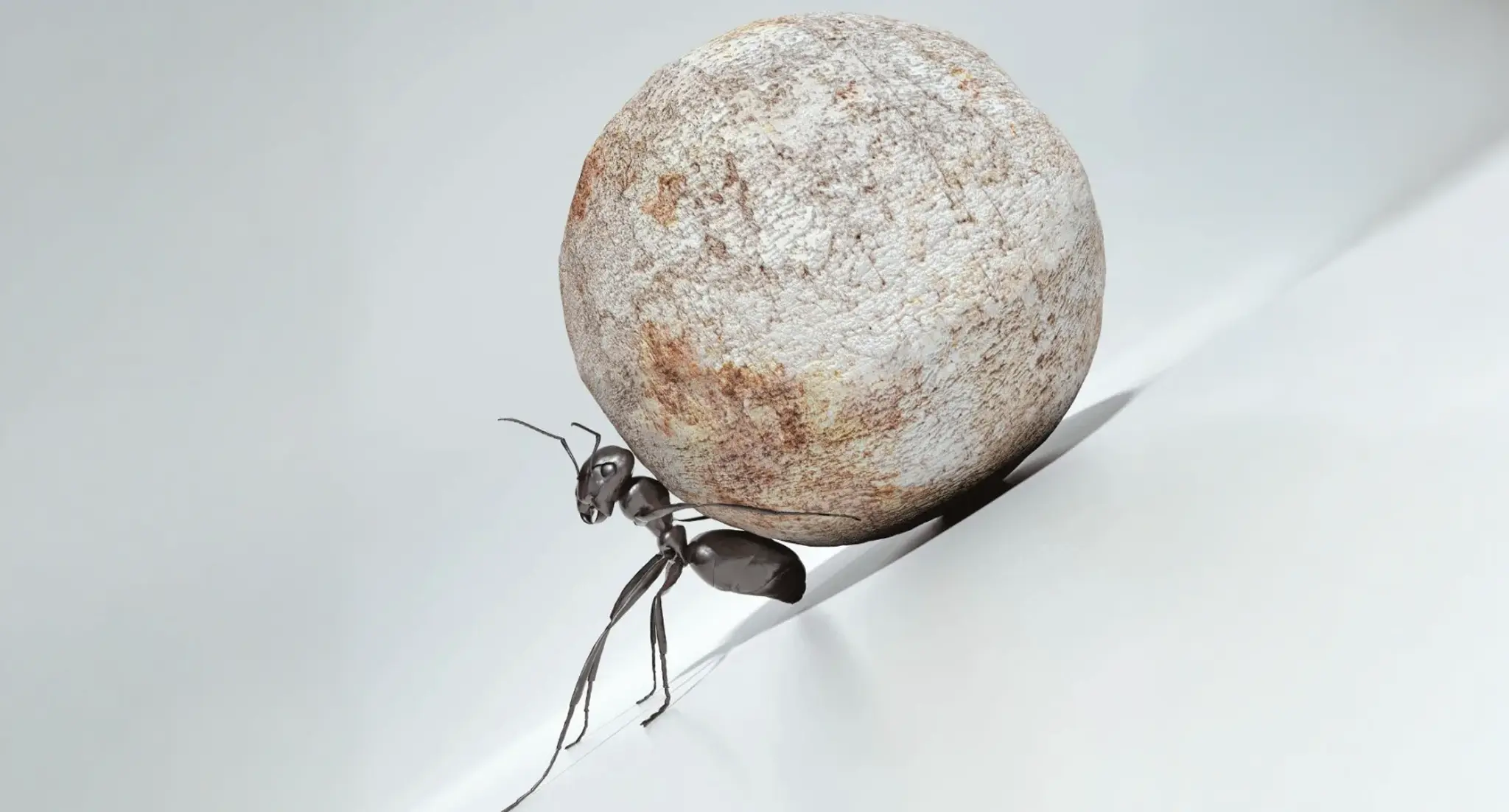
Write what you know, they say… Which is perhaps why I haven’t written that much over the past few weeks. Another well-loved adage is that old chestnut: “The more you learn, the more you realise how little you know”. Now, perhaps some context is necessary here; I am currently trying to educate myself (aided and abetted occasionally) on the multiheaded Hydra that is the publishing world – more specifically, the indie publishing world. And thus far it has been both a positively edifying experience as well as an exercise in (apparent and self-perceived) futility. Enter Sisyphus.
Just like any other skill, navigating the new waters of the publishing (and particularly the marketing and PR side) takes a special kind of approach. Logic is, of course, key, and a healthy dose of scepticism when it comes to people and their offers to “help”. I like to believe that I have both of these qualities in spades, however, it has been a helpfully humbling experience to realise that I can still display shocking levels of gullibility and and staggering lapses in judgment. Thus far, I’ve been lucky, because the only things my shortcomings have cost me were money and pride (though both are not an endless supply, I’ll have you know).
Other essential qualities when braving this new world of books, BookTok, and everything in-between, include (but are not limited to): self-awareness, introspection, self-motivation, and a thick skin. Sensitivity, though apparently essential to the writer’s soul, has no place in the choppy waters of self-promotion in self-publishing – a bit of a catch 22, as it were, because this essential writer’s sensitivity can lead to rampant insecurity, imposter’s syndrome, and consequently (that horror beyond horrors): writer’s block.
So, to avoid turning this into a “woe is me” entry (or to limit the extent of it, at least), I shall share a few titbits of wisdom I have learned thus far in my self-publishing journey:
- Try to figure out as much as possible BEFOREHAND.
- Research and plan the release/publication aspects of your book THOROUGHLY in advance (i.e., have a plan that extends beyond the plotting of your book – unlike me). I put all my efforts into writing the actual book and approached the entire publication process haphazardly, which, in hindsight, led to consequences and mishaps that could have been mitigated through more thorough preparation.
- Think about things like how far ahead of your release date you will be sending ARCs to reviewers, which reviewers/bloggers you will be asking, and how you will share information about your book with everyone prior to its publication. Do you have a website set up? Do you have social media accounts (with the requisite following) to get word out about your book? Remember: your friends and family on Facebook do not really qualify as potential audience/readership numbers (see point 5 below).
- Ensure you have a pre-set budget for things like reviews and marketing (i.e., besides your budget for proofreading, editing, and cover layout/design).
- This is a definite must, in my opinion, unless you’re willing to let your book be buried obscurely somewhere on a bookseller’s website and hope for the best, or alternatively, to be at the mercy of capriciously inconsistent – if well-meaning – (free) reviewers and bloggers that make promises and then never get back to you.
- I recently saw an interesting post from a successful indie author stating that any kind of paid reviews or paid book prizes were scams (no matter how “legitimate” or “prestigious” in the publishing industry). I genuinely wonder how indie authors are then supposed to receive proper reviews, because I personally sent out more than 60 emails to reputable (free) book reviewers, and received responses from 3 altogether (one of whom then never got back to me after agreeing to review my book, and another asking for money and then not delivering on the services promised).
- I launched a Goodreads Giveaway of 100 books (again, also paid), and a LibraryThing giveaway – these resulted in the sum total of 4 reviews for my book. Thus far, all the paid reviews I have taken on have been professional and did what they promised, so – as far as I’m concerned – at least I know what I’m getting. I can only assume that already-successful indie authors have a following already, and that one built up at a time when there was much less competition in this particular field…
- It is very important to stick to your budget outline, because there are so many people who promise you the moon and the stars, should you use their services (see next point). DO NOT convince yourself that this next (unbudgeted) payment will be the one that gets your book out there, and having a pre-set framework based on thorough research (from which you absolutely will not deviate) will help you avoid stepping in that yawning trap.
- Be careful whom you trust, whether with your money, or your manuscript.
- There are charlatans everywhere, and in every industry. However, you also have people who genuinely believe the service they provide justifies the fees they charge. It is your responsibility to check on their previous work and the results thereof. That said, I have been taken in by stellar examples provided during the pitch from reviewers and publicists, but then am forced to chase after them and send a thousand follow-up emails once payment has been made and services are due.
- And then you have the difficult conundrum: do you complain, or even make your dissatisfaction with their misrepresented services public, thereby burning bridges in an environment where you are already at the very bottom of the food chain? I am still trying to answer this last one…
- I have also found the initial ARCs of my book on illegal download sites, and due to certain features of the pdf, been able to pinpoint it to a specific batch of manuscripts sent to reviewers. Thus, it stands to reason that one of the reviewers passed on the ARC till it ended up on said site (I have since learnt my lesson and come up with a potential plan for future issues of this nature).
- Constantly manage your expectations and ambitions.
- Unless you’re willing to plug away relentlessly at marketing and sharing your book on various platforms, then perhaps the “writing on in the background and hoping for the best” mindset and approach is for you (especially if, like me, you aren’t the social media butterfly that churns out posts non-stop). Never forget: a well-written book and a few good reviews (no matter how legitimate or prestigious) do not guarantee book sales or popularity. A bitter pill to swallow, but a necessary tonic, nonetheless.
- As the saying goes, “it’s not about what you know, it’s about who you know”, though I would offer a slight adaptation in the modern indie writer milieu: the “who” that you know is someone in the industry who can help you (usually, in exchange for the green), OR, you somehow gain traction through social media and readers – but that is a big ‘if’, because daily posting and pushing of your book will not necessarily bear any fruit. The Fate-algorithm is a fickle thing, and we its mere drudges and acolytes.
- Prepare yourself for the general lack of genuine support from most of your friends, family, and acquiaintances.
- This is a difficult one to anticipate, because it is very much dependent on the people in your life. Also, it is very hard to accept with equanimity once the fact becomes obvious. We would all like to believe that most of the people that we surround ourselves with would support our passion projects as much as we would support their ventures. Unfortunately, your own enthusiasm and commitment to your book and spreading the word will probably not be mirrored by most of the people in your life. (If this is not the case for you, then you and your people have my utmost admiration and some of my envy).
- Of course, not everyone is a reader, and even if they are, that does not necessarily mean they are a fan of your book’s genre. However, one would hope, at the very least, that friends and family would spread awareness of your book, and it can be very frustrating and hurtful to realise your “grande opus” is a mere footnote to many of the people in your life. Thus: prepare yourself for this possibility – both emotionally and in terms of your expectations.
I know these points seem to cast a very negative light on the entire independent publishing route, however, I would like to reiterate: I do not regret self-publishing for one minute (not yet, anyway). To me, all of these anxieties, potential issues, and uphill learning-battles are worth it, because my book remains entirely mine – in all its glory, and with all its failings. I prefer to be solely responsible for any of its potential failures than be obliged to be directed by others creatively; I would rather be the captain of my own ship – even a small dinghy – than one in charge of an ocean liner in name only, and at the mercy of greater forces. Perhaps that makes me willful and arrogant, but I like to think of it as being independent and unfettered.
So, onwards and upwards with the boulder that is my self-education in self-publishing, as well as constructing my next book, The Trials of Ata, for its launch. The captain of my own ship, indeed… (though I ardently hope it’s not the Titanic, in this case).


Published by K.I.S.
A wandering South African who lives far from home, K.I.S. reads prolifically and writes sporadically to connect and disconnect in equal measure. An author of epic fantasy, short stories, and microfiction, you can find her debut novel, ‘The Assays of Ata’, on Amazon and Barnes & Noble.